
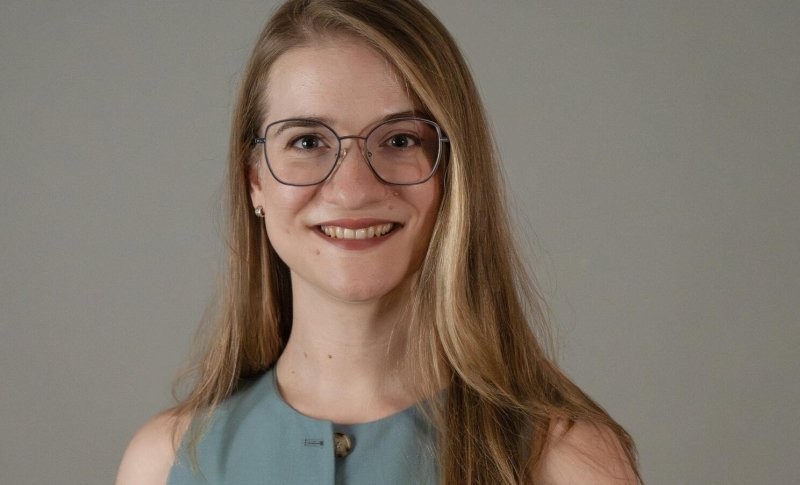


Elisa d'Alessandro
Post doc
Dr Elisa D’Alessandro obtained a joint Master’s degree in Molecular and Cellular Biology from the University of Siena (Italy) and the Bristol Heart Institute (UK) in 2016.
In 2017, she started her PhD at the Department of Biochemistry at CARIM, where her research focused on the interplay between atrial fibrillation and hypercoagulability. She obtained her PhD in 2022 and subsequently joined the research group of Dr Eringa at the Department of Physiology as a postdoctoral researcher, where she expanded her research focus to organ-specific adipose tissue biology and diabetes.
In 2025, she was awarded a Junior Dekker Postdoctoral Fellowship from the Dutch Heart Foundation for her research on the role of adipose tissue in atrial fibrillation. As part of this fellowship, she joined the Department of Physiology at CARIM as a staff member in the group of Prof. Schotten, where she continues to investigate the interplay between adipose tissue, metabolism, and cardiovascular disease.
Elisa is a translational scientist studying inter-organ and inter-tissue crosstalk in the pathophysiology of atrial fibrillation (AF), with a focus on the cellular mechanisms that drive its onset and progression. Her research examines the interplay between the blood coagulation system, atrial tissue, and cardiac adipose tissue. Through her Dekker Fellowship, she investigates how local interactions between the atrial myocardium, epicardial fat, and the blood coagulation contribute to the development of a structural submstrate for AF progression. Her work combines spatial transcriptomics of patient cardiac samples with complementary in vivo and in vitro experimental models.
In 2026, Elisa was awarded the Anna Maria van Schurman Stipendium from CARIM. This funding allows her to expand her spatial transcriptomics research by integrating advanced spatial proteomics and metabolic imaging to map the crosstalk between atrial tissue and cardiac fat within their native tissue context. By resolving these interactions in situ, her work aims to reveal how they evolve over time and contribute to the development of atrial cardiomyopathy.
